background

Sugar Rush 1000 Slot RTP

This video shows how to assess return and risk in Sugar Rush 1000 in Poland in order to play responsibly and manage your budget.

Sugar Rush 1000
Sugar Rush 1000

What Does Sugar Rush 1000 RTP Mean and How to Read It

Game parameters may sound technical, but in practice, they help answer a simple question: are you playing a title that matches your style and nerve? Instead of focusing on abbreviations, think of them as a map—they show how the game typically distributes payouts over the long term, not in a single session. Before starting the machine, it’s advisable to check the game rules description in the casino lobby, as this is where you'll most commonly find return and volatility information presented in a player-friendly format.

Imagine a scenario: you have a free evening, you insert a small budget, and you simply want to enjoy 30–40 minutes of play. If you choose a game with a more intense profile, you might go for an extended period without seeing any significant wins, which can make you feel like “something’s off.” Often, however, everything is perfectly normal—the game simply has a character that rewards less frequently but with larger payouts. Therefore, consider parameters as a filter before entering, not as a guarantee of outcome.

In practice, three things matter: return to player (RTP), variance (sometimes referred to as volatility), and minimum and maximum bet limits. RTP indicates how the game behaves statistically over a very long period, but it's not a plan for today’s session. Variance tells you whether wins tend to come in smaller, more frequent amounts or less often but with the potential for larger jumps. Bets, in turn, serve as a control tool—if you feel emotions rising, it’s easier to stick to your plan at lower stakes.

If you’re playing from Poland, also remember responsibility on the player’s side: stick to your own limits, use time and budget control tools, and above all, play only as a legally adult individual. Operators usually provide deposit limits, session breaks, and account self-exclusion options—not to spoil fun, but so you don’t have to “fight yourself” mid-session.

All promotional incentive structure is clearly stated in writing and/or via electronic means in an easily understood manner. All codes are accompanied by an explanation of what the code is for, who is eligible to use the code, and how it should be used. As such, players are less likely to be confused about what is required of them in order to receive a reward and how the reward will be applied after receiving it. The promotional incentives provided to participants provide them with time to become familiar with the gaming system's mechanics, their interface, and progress, before deciding how deeply they wish to become involved with this platform. Therefore, players are encouraged to participate in an informed manner, rather than being pressured or tempted to act quickly.

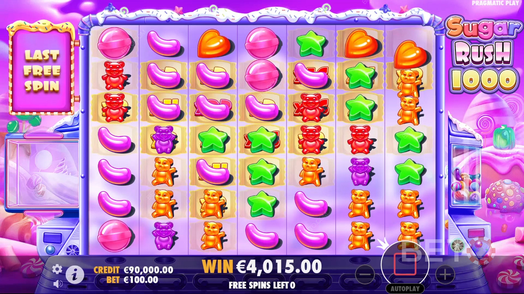
reviews image 1
Sugar Rush 1000

Top casinos for playing Sugar Rush 1000 — current list

ALF Casino
ALF Casino
Mafia Casino
Mafia Casino
LeoVegas
LeoVegas
Sugar Rush 1000 Betway
SG Casino
Sugar Rush 1000 Betano
Retro Bet
Sugar Rush 1000

Why Sugar Rush 1000 RTP Depends on the Casino

What you see as “game parameters” may describe a variant configured by the operator. Many slot machines operate in several RTP configurations, and the casino chooses which version to offer in its lobby. This matters to players because two individuals can play the same title yet have slightly different experiences over the long term. The goal isn’t to hunt for the “perfect number,” but to know where to find this information and how to compare it with other titles.

Usually, it goes like this: you enter the game, see colorful graphics and a start button, but don’t immediately see the statistical settings. If the operator displays them, you’ll find them in the game description, the title’s terms of service, or the information section. Imagine you’re playing after work and want to quickly decide whether this is today’s “calm game” or “thrill game.” In such a case, spending 30 seconds reading the description can save you half an hour of frustration.

In Poland, the practical context is also important: payment methods, account currency, limits, and verification processes can all influence how comfortably you move through the entire cycle—from deposit to payout. If you know you want to withdraw part of your winnings afterward, choose an operator that clearly outlines procedures and doesn’t force you to guess. This isn’t “secret knowledge”—it’s simply good gaming hygiene.

A good routine is straightforward. First, verify game availability for your region (here: Poland) and age requirements. Then, check the minimum bet to match it with your budget. Finally, set your own limits—because even the best parameters offer nothing if your session goes out of control. When you play responsibly, statistics stop scaring you and begin to help you make decisions.

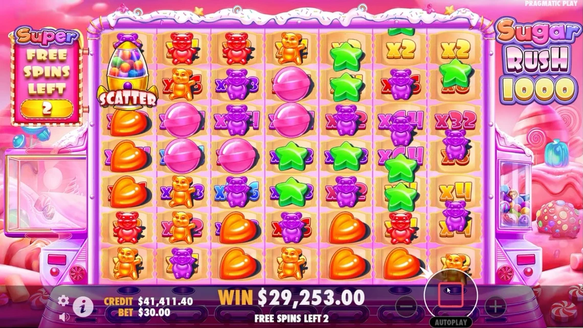
reviews image 2
Sugar Rush 1000

How to Prepare an Unemotional Sugar Rush 1000 Slot Review

A truly helpful slot review doesn’t rely on praise or complaints. It breaks the game down into components: pace, rule clarity, win rhythm, risk, and bet control tools. Instead of writing “it pays” or “it doesn’t pay,” you describe how the game behaves in a typical session under your settings. This is especially important if you want your text to remain relevant in 2026—players are becoming increasingly aware and expect concrete details.

If you’re turning on the slot for the first time, test it like an editor, not a miracle hunter. Imagine you have only 15 minutes before you must leave—you want to check if the interface is readable, if you know what triggers bonus features, and if you can quickly change the bet. In such a situation, you’ll notice things you’d miss during a long marathon: icon readability, animation pace, and payout table clarity.

It’s worthwhile to describe three player scenarios in your review. First: “I play little, for fun”: low stakes, short session, emphasis on time control. Second: “I seek thrills”: acceptance of larger swings, longer gaps between wins, need for stricter limit planning. Third: “I play strategically”: testing various bets, taking notes, ending sessions according to rules rather than mood. Such an approach gives readers something they can apply immediately.

In closing, add an honest disclaimer: the result of a single session doesn’t define the game, and predicting “what will happen” is a trap. Instead, offer simple tips on what to check before starting: limit settings, feature descriptions, payout rules, and support accessibility. Such a review doesn’t promise—it teaches—and that’s precisely why it works.

Sugar Rush 1000

Session Settings, Budget, and Risk Management

Biggest mistakes don’t stem from lack of knowledge, but from lack of planning. A player starts “just for a moment,” then tries to recover a losing streak by increasing bets. In 2026, control tools are already standard at many sites, but they must still be consciously activated. If you're playing from Poland, treat this like setting up seatbelts—do it once, and it functions in the background afterward.

Imagine you have a set amount in your wallet for entertainment, but you need to pay bills tomorrow. In this case, deposit and loss limits aren’t restrictions—they’re a shield that prevents you from mixing your entertainment budget with your living budget. Well-set limits allow you to play more peacefully because you don’t have to constantly monitor yourself.

How to Set Limits Before the First Spin

The simplest plan has three steps: time, budget, and exit rule. First, set a session timer or reminder—even a standard phone alarm works if you don’t want to search for settings in your account. Then, choose the maximum amount you’re willing to spend on entertainment each day. Finally, add an exit rule: end the session after a set number of minutes or after losing the planned amount, no exceptions.

Usually, players do the opposite: start playing, fall into rhythm, and only consider limits at their first major loss. Imagine this situation: it suddenly gets late, and you feel like “just one more spin and then I’m done.” At that point, the time limit functions like an external referee—you don’t have to argue with yourself because the decision was already made earlier.

It’s also important to align bet size with budget so you don’t burn through your session in five minutes. With a small budget, start lower and let the game “breathe,” instead of trying to speed up the outcome. This isn’t advice about “winning,” but about making your entertainment last as long as you planned.

When to Take a Break and Enable Timeout

A break isn’t failure—it’s part of the plan, especially in games where emotions rise quickly. If you notice yourself clicking faster, staring only at the balance, and ceasing to pay attention to rules, it’s a good moment to pause the session. Timeout works best when activated not “after the fact,” but at the first signs of tension.

If you're playing in the evening and someone speaks to you, but you reply without listening—that’s a classic sign you’re already in automatic mode. Imagine you only want to try a few spins before sleeping, but end up feeling you’ve wasted time. A short break, a glass of water, and returning only when you truly want to play—not to “settle accounts”—makes all the difference.

Timeout or self-exclusion are tools for adults who take entertainment seriously. They give you control before emotions take over.

Signs You've Been Playing Too Long

Three most common signs appear: raising bets without a plan, ignoring breaks, and playing “out of spite” after a losing streak. If you catch yourself in any of these, stop and return to your established time or budget limit. A simple pause can change your entire evening.

Simple Return-to-Control Plan

Close the game, write in two sentences what happened (e.g., “I raised my bet after a losing streak”), then decide: finish today, or return only at minimum bet and with a timer. This mini-report acts like a brake—you stop playing “into the fog” and again see your own rules clearly.

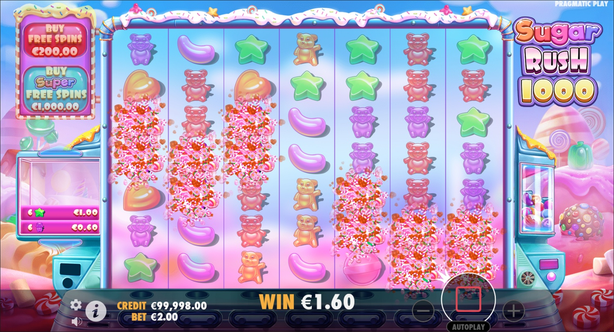
reviews image 3

Sugar Rush 1000 Casino Bonus Codes Activation Process

Sugar Rush 1000 Casino Bonus Codes Conditions

Deposit, Withdrawal, and Identity Verification

Game parameters are one thing, but playing comfort often hinges on account-related processes. Deposits should be simple, withdrawals predictable, and verification understandable. In Poland, operators usually require age and identity confirmation—it’s part of responsible gaming and security, but it’s wise to prepare in advance so you’re not stuck halfway through the process.

Imagine you win a significant amount and want to withdraw part of your winnings the same day. If your profile isn’t complete or you enter data quickly, a simple typo could halt the operation. Therefore, these matters aren’t “bureaucracy”—they’re good practice.

Deposits: How to Choose a Method and Maintain Control

The best deposit method is one that fits your style and helps maintain your budget. If you like clear boundaries, choose solutions where transaction history is easy to check and limits are quickly activatable. Pay attention to account currency and potential currency conversion—sometimes this is negligible, other times an unexpected cost that ruins your session plan.

Players often think of deposits as a single click, then only later review their weekly spending. Imagine you only play “on weekends,” yet it turns out you’ve made three small midweek deposits because they were “small.” That’s precisely why choosing a method that simplifies control—not just speed—is wise.

Processing step

What to check before starting

Why do it

How to set it

Account Currency

Does it match your budget

You avoid unnecessary exchange rate differences

In profile or wallet settings

Deposit Limits

Daily and weekly limit

You keep expenses under control

In responsible gaming tools

Transaction History

Is it clear and complete

It’s easier to analyze your habits

In the payments or cashier section

Confirmations

Do you receive notifications

You detect errors faster

In account settings

Withdrawal Method

Is it available for withdrawals

You avoid last-minute method changes

Method selection at first withdrawal

Withdrawals: How to Avoid Data Errors

The most common problem is trivial: data mismatch. A different surname in your profile than on your document, a typo in the address, a swapped number. This doesn’t necessarily mean anything malicious, but it usually prolongs the process. The best approach is to complete your profile once, calmly, preferably before your first large deposit.

If you play from Poland and value predictability, treat withdrawals like a procedure: first, check your data; second, choose your method; third, save the confirmation. Imagine you’re in a rush because you want to “catch the moment”—that’s when errors are most likely. Better to do this calmly, without emotions.

It’s also worth remembering to split funds: after a win, some players immediately withdraw the “profit” and leave only the budget for the next session on their account. This simple solution helps prevent impulsive play.

Verification: What to Prepare in Advance

Verification can be frustrating only if it happens mid-session. If you prepare your documents ahead of time and ensure the photos are clear, you’ll save yourself a lot of stress. Operators often request identity and age verification—this is a standard security measure, especially in responsible gaming environments.

Often, players delay this “until later,” because they want to play right now. Imagine this situation: you’re having a good run, you want to withdraw, and the system asks for extra steps. If everything is ready, you handle it in minutes and get back to your plans. If not—you’re running around the house, taking quick photos, and that’s an easy path to errors.

Mobile, Demo, and Features in 2026

In 2026, most players launch slots from their phones, often during breaks or on the go. This changes the way they play: sessions are shorter, more frequently interrupted, and more prone to impulses. Therefore, mobile gaming demands even better time control and simpler limits. The good news is that interfaces are increasingly user-friendly, and account management options are usually right at your fingertips.

Imagine you’re playing in line, the screen is small, and you want to quickly change your bet or check the rules. If the game has a clear menu and simple icons, you’ll instantly feel comfortable. If not—you start clicking blindly, and in chance-based games, that’s the worst possible habit.

Playing on a Phone: What to Check Before Starting

Start with technical details: stable connection, battery, energy-saving mode (which sometimes cuts animations), and comfortable screen settings. Then move on to the more important things: can you easily enable limits, do you see your betting history, and can you quickly end a session? Mobility should be a convenience, not a trap.

Usually, players think: “it’s just a few spins,” so they don’t set anything up. Imagine those “few spins” turning into 25 minutes, because time slips faster on a phone. A timer and a budget limit then do the job—even if the session is short.

Demo Mode: Why Play Risk-Free

The risk-free mode is great for learning. You can see how mechanics work, what triggers bonus features, and how often specific symbols appear—all without budget pressure. It’s also a good place to check whether the game’s pace suits you. If after 10 minutes you feel exhausted or irritable, that’s a signal this title doesn’t fit your style.

Imagine you plan to play only once in a while and don’t want to spend money on “learning the rules.” In demo mode, you conduct a quick reconnaissance: you learn how to adjust bets, check whether you understand the messages and where the payout table is, and only then decide whether this game is even for today.

Buying Features and Bonuses: When It Makes Sense

Some slots offer options to speed up access to bonus rounds. This may sound tempting, but always treat it as a separate expense in your entertainment budget—not as a “smart shortcut to results.” If you have a session plan, include such decisions in advance: either use them or don’t. The worst you can do is turn on extra features under emotional influence.

Usually it goes like this: a series of weaker rounds, rising frustration, then the thought: “I’ll try again, just faster.” Imagine instead taking a pause and returning to your plan—lower bets, shorter session, stop after the time you set. Such a move doesn’t guarantee results, but it gives you control, and that’s real value.

Customer Support: How to Solve Problems Quickly

Issues happen to everyone: disappearing balances during refresh, interrupted connections, questions about documents. Good support is clear—telling you exactly what to do, step by step—not burying you in vague answers. Before playing seriously, check whether support is available during hours that suit you, and whether you know where to find your transaction history and confirmations.

Imagine this scenario: your round is interrupted, and you’re unsure whether it completed. Instead of panicking and clicking further, take a screenshot, record the exact time, and contact support. This simple procedure usually speeds up resolution and saves your nerves.

Frequently Asked Questions About Game Parameters

Can you “read” a game like a chart? To a certain extent, yes—but only in terms of understanding its profile: what kind of experience you can expect during longer play. Parameters aren’t promises of winning—they describe behavior over time. When you view them as a planning tool, you start playing more sensibly: choosing your bet, setting limits, and stopping exactly when you planned.

Imagine today you want calm entertainment, but tomorrow you have an important day. Then choose a game that doesn’t require “emotional chasing” and stick to a short session. Other times, you might want stronger thrills—but then set stricter limits in advance, because you know it’s easier to slip into impulsivity.

Understanding Volatility and Losing Streaks

A run of weaker rounds doesn’t mean the game is “broken.” Often it simply means you’ve hit a segment of the distribution where larger events occur less frequently. What matters is what you do during such a streak. If you increase your bet without a plan, risk escalates exponentially. If you stick to your budget and time limits, the streak is just part of the entertainment—not a reason to fight back.

Usually, after a few losing rounds, players start “chasing recovery” in the next spins. Imagine instead taking three steps: lower your bet, set a 10-minute timer, and decide to stop regardless of outcome. This simple technique cuts impulsive urges. In the long run, such behavior is what separates mindful play from emotion-driven gambling.

FAQ

Can the RTP vary between casinos?

Yes, sometimes operators use different configurations of the same title—so it’s worth checking the game description in the lobby before you start, and comparing conditions in several places, instead of assuming it’s identical everywhere.

How to set limits so they don’t ruin the fun?

Best to set them with your comfort in mind: time limit to match session length, deposit limit to match your entertainment budget, and a clear exit rule—and then stick to them like a plan, so you won’t have to make decisions under emotional pressure.

Does demo mode really help?

It really does: it lets you learn mechanics without financial pressure—you test the game speed, rule clarity, bet adjustments, message comprehension, and only then decide whether this slot fits your style.

What to do if the connection drops during play?

First, stop and avoid clicking frantically. Then check your round history or balance after refreshing. If doubts remain, gather basic details (time of event, situation description, possible screenshot) and contact support.

Why withdraw part of your win right away?

It’s a simple control method: you separate living funds from entertainment money, reduce the temptation for impulsive play, and find it easier to stick to your plan—since only the budget for the next session remains on your account.

How to recognize when it’s better to end a session?

Frequent signals include changes in behavior: clicking faster, raising bets without a plan, ignoring breaks, or playing “to spite it” after a losing streak—so the best response is to take a break or stop as per your pre-set time limit.

Can you play responsibly if you enjoy strong emotions?

Yes, but you need stronger control: shorter sessions, stricter budget limits, pre-set breaks, and a clear decision to stop after the time you planned—since higher intensity makes impulsivity easier and rational assessment harder.

Play Now
🇬🇧 English